
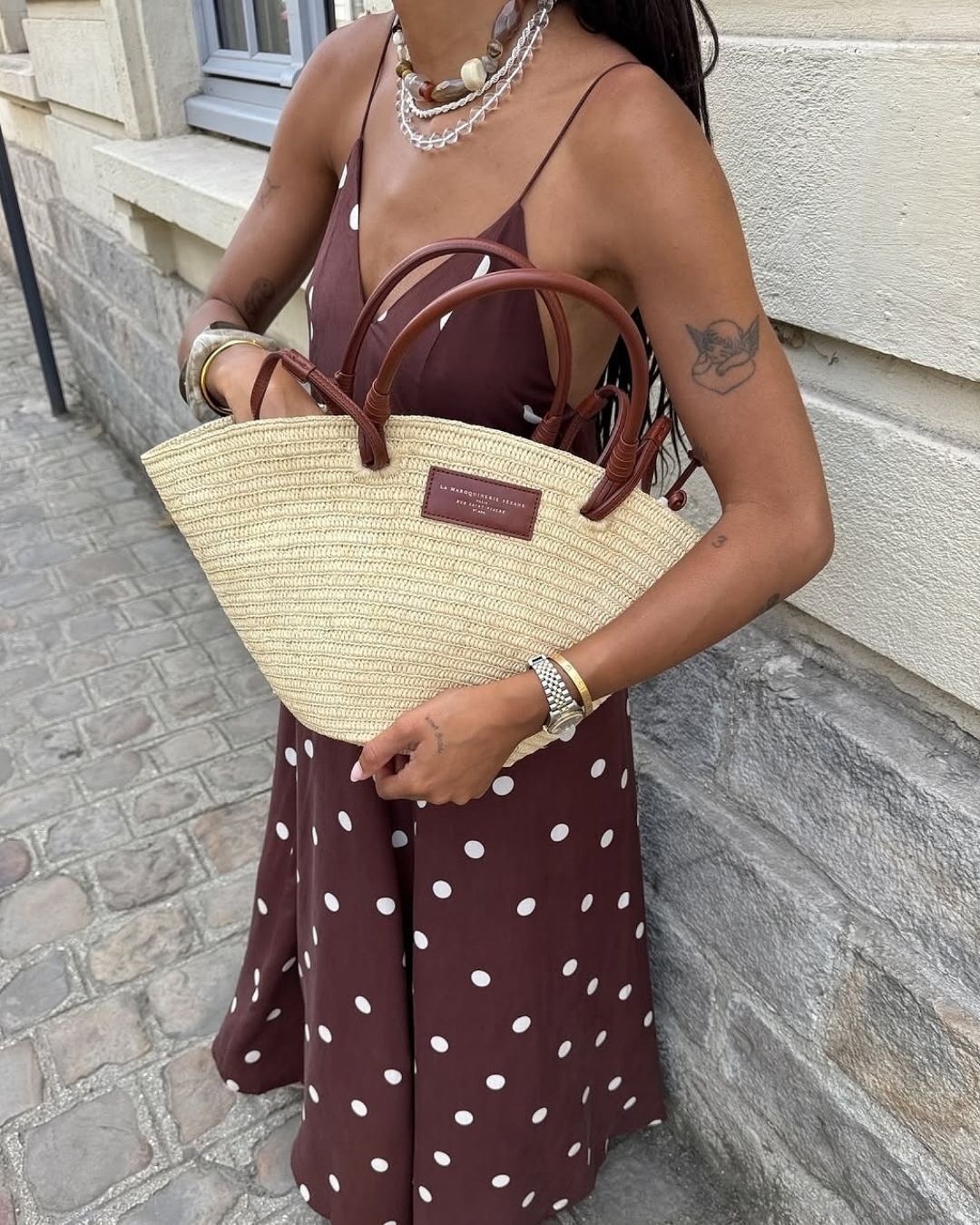
The new popularity of intermediate brands explained Balzac, Sézane, Rouje and Polène are part of a rising trend: accessible luxury
While many traditional ready-to-wear retailers are losing momentum, some so-called "intermediate" brands are experiencing real growth. Balzac Paris, Sézane, Rouje, and Polène embody a rising trend: that of accessible luxury, or "mastige", a blend of "mass" and "prestige". This positioning, halfway between mass retail and luxury houses, appeals to customers seeking quality, meaning, and authenticity, without necessarily being able (or willing) to afford the prices of major luxury brands. One of the secrets behind their rise lies in their direct-to-consumer (DTC) model, meaning direct sales via their websites or own stores. This channel not only reduces intermediary costs but also allows complete control over brand image, customer service quality, and the production chain. Polène, for example, a Parisian leather goods brand, relies on this strategy to offer well-designed bags made from quality materials at significantly lower prices than luxury giants. The brand's success is such that there are long lines outside their boutiques, and many products are out of stock. Some even say it is a "victim of its own success".
Thanks to a strong digital presence and targeted marketing strategies, especially via social media and influencers, these brands manage to reach a young clientele, connected and sensitive to brand image. Aesthetic appeal, artisan storytelling, and sustainable commitments all work together to build a strong emotional connection with consumers. Recent scandals in the luxury industry, such as the revelation that a Dior bag sold for $2,800 actually cost only $57 to produce, have also contributed to redirecting consumers toward more transparent and responsible alternatives. Brands like Balzac Paris, which saw a 30% increase in revenue in 2023, focus on sustainability, ethical manufacturing, and genuine messaging. They meet the expectations of a value-driven clientele, often disillusioned by greenwashing or the excesses of traditional luxury. Moreover, the successful international expansion of brands like Sézane shows their ability to export while maintaining a strong French identity. Their success abroad is based on an image of accessible refinement and their agility through digital innovation.
The success of accessible luxury is also driven by a major economic and sociological factor: the rise of the middle class, especially in large metropolitan areas. This population, more educated, more connected, and more demanding, seeks to consume differently: better rather than more. They want access to products that carry values and image, while staying within budget. Mastige perfectly meets this aspiration: it offers style, quality, and ethics at reasonable prices. Accessible luxury is also a mindset. It is no longer just about owning a product but about sharing values, a story, a commitment. Exclusivity is being redefined: it no longer relies solely on price but on rarity, artisanal quality, and the coherence of brand identity. Thus, mastige is emerging as a response to market shifts: the rise of the middle class, the search for meaning, digital consumption, and demand for transparency. The success of these hybrid brands proves that luxury is not dead; it is simply reinventing itself.